
Hybrid and Virtual Press Events: When They Work Better Than In-Person
Key Takeaways
Virtual and hybrid formats extend your reach to regional, national, and international journalists who would never travel for a single press conference.
In-person events still win on relationship-building — the informal conversations before and after the formal program, and physical product demonstrations, don't translate well to a screen.
Hybrid events demand real technical investment, not an afterthought webcam bolted onto an in-person setup — reliable streaming, adequate bandwidth, and a dedicated remote moderator.
The announcement itself should decide the format — what you're announcing and who needs to see it matters far more than which format is currently in vogue.
A half-committed hybrid event is often worse than a well-run single-format one — remote attendees who can't hear questions or see demonstrations clearly disengage fast, and it shows in the coverage.
Quick Answer
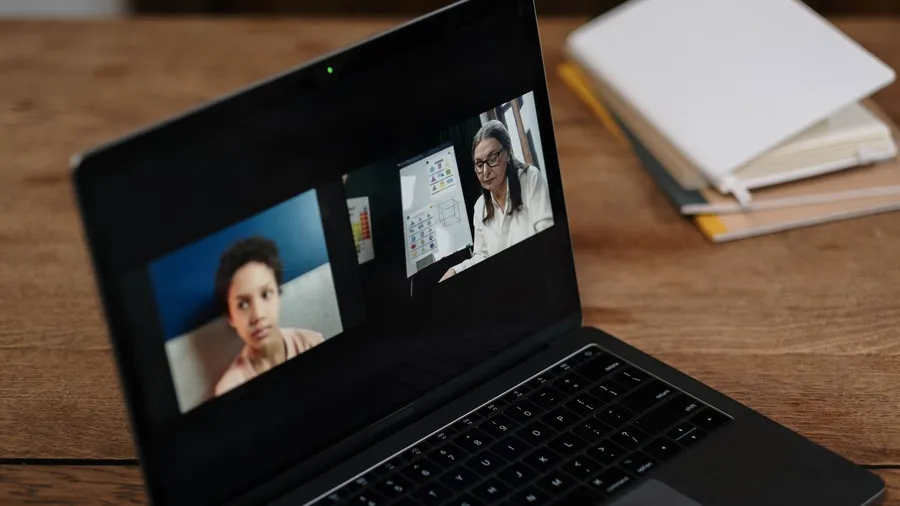
Virtual and hybrid formats outperform in-person when your target media list is heavy with regional, national, or international outlets that can't easily travel, when the announcement is primarily informational rather than experiential, or when budget doesn't justify a full physical production — provided the technical execution gets as much planning as the message itself.
Format Isn't a Trend Decision — It's a Strategy Decision
A lot of companies pick their press event format the same way they pick a font: based on what feels current. Hybrid sounds modern and efficient, so it gets chosen by default, even when the announcement would have landed harder with a room full of journalists watching a live demo. Fully virtual sounds cost-effective, so it gets chosen even when the story genuinely needed a handshake and a walk-through.
The better question isn't "what format do other companies use now?" It's "who do I need in the room (physical or virtual), and what do they need to experience to write a strong story?" A product that needs to be touched, worn, tasted, or watched in motion has different requirements than a leadership transition announcement that mostly needs a clear statement and a chance to ask follow-up questions. Once you're honest about what the announcement actually requires, the format choice gets much easier.
The Reach Advantage: Getting Distant and International Media Into the Conversation
This is the strongest, most straightforward case for virtual or hybrid formats. If your media list includes trade journalists based in another province, regional correspondents who cover Southeast Asia from Singapore or Hong Kong, or international outlets that would never fly someone in for a single Bangkok event, a purely in-person press conference simply excludes them. They'll rely on a press release, a recording, or a colleague's notes — none of which produce the same quality of coverage as a journalist who watched the announcement live and got to ask a question.
A virtual or hybrid option removes the travel decision entirely. A journalist in Chiang Mai, Phuket, or Jakarta can log in for forty minutes without blocking out a full day for transportation and logistics. For companies with a genuinely national or regional story — a market expansion, a fundraising round with international investors, a partnership with a foreign brand — this alone can be the deciding factor. The coverage you gain from outlets who simply couldn't have attended in person often outweighs whatever atmosphere you lose by not having everyone physically present.
It's worth being specific about who actually benefits here, though. Reach matters most when your announcement has a real audience outside your usual local press circle. If every reporter you actually want at the event is already based within a short taxi ride of your venue, the reach advantage of going virtual is mostly theoretical.
What In-Person Still Does Better: Chemistry, Demonstrations, and the Conversations That Happen Off-Camera
The case for in-person events doesn't rest on nostalgia — it rests on things that are genuinely hard to replicate through a screen. The first is physical demonstration. If your announcement involves a product journalists need to hold, a device they need to see in operation, a space they need to walk through, or food and beverage they need to taste, a livestream flattens the experience into something a journalist has to take your word for. A demo that would generate hands-on photos and a strong first paragraph in person becomes a passive viewing experience online, and the resulting coverage is noticeably thinner.
The second is the informal window before and after the formal program — the ten minutes journalists spend chatting near the registration table, the follow-up conversation after the Q&A officially ends, the chance for your executive to have a two-minute one-on-one with a reporter who has a follow-up question they didn't want to ask in front of competitors. None of this happens naturally in a virtual format. Some hybrid events try to simulate it with breakout rooms, but the energy is different, and most journalists simply log off once the formal program ends.
The third is harder to quantify but real: a room full of press, cameras, and executives creates a sense of occasion that signals the announcement matters. For a flagship product launch, a major funding milestone, or an anniversary event meant to generate broad brand visibility, that atmosphere becomes part of the story itself — something photographers and TV crews can capture that a webcam feed cannot.
The Real Technical Requirements of Running a Hybrid Event Well
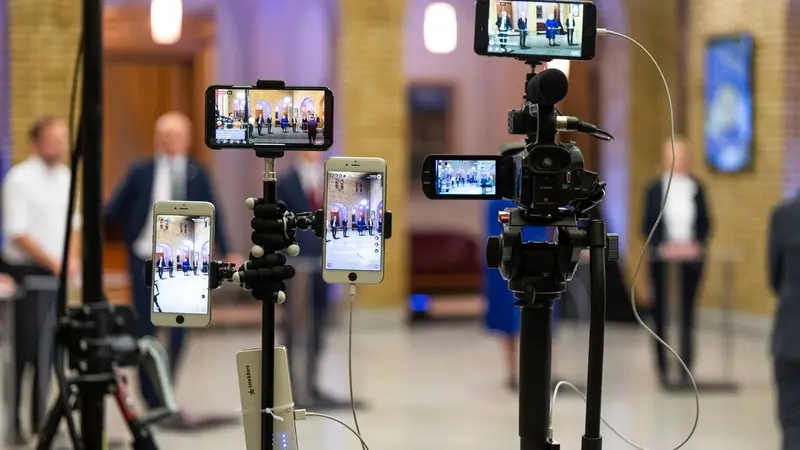
Hybrid is the format most likely to disappoint, and it's almost always for the same reason: the virtual half gets treated as a bonus feature rather than a full second audience with its own needs. Running a hybrid event properly means solving for two audiences simultaneously, not favoring the room and hoping the stream works out.
A few non-negotiables:
Reliable, tested AV and streaming infrastructure. This means a dedicated internet connection (not the venue's shared guest Wi-Fi), backup connectivity, professional-grade microphones that pick up questions from anywhere in the room, and a camera setup that captures both the presenter and any physical demonstration clearly. Audio quality matters more than video quality — a slightly grainy stream is forgivable, but garbled or dropped audio makes the entire virtual experience unusable.
A moderator whose only job is the remote audience. The single most common hybrid failure is a Q&A session that only takes questions from the physical room because nobody is actively watching the chat or virtual hand-raise queue. A dedicated moderator — someone not also running slides or managing the in-room agenda — should be reading virtual questions aloud, giving remote attendees a clear cue for when they'll be called on, and confirming that all their questions get addressed before the session closes.
A full technical rehearsal, not a five-minute mic check. Test the stream from an actual remote location, not just from a laptop backstage on the same network as the AV setup. Confirm that slides, video clips, and any product demonstration are visible and audible from the virtual side exactly as they will be during the real event. Problems that show up in rehearsal are inconveniences; problems that show up live, in front of journalists, become part of the story.
A plan for what virtual attendees can't naturally access. If there's a physical product on the table, make sure the camera gets a clear, well-lit close-up rather than a distant wide shot. If press kits or samples are being handed out in the room, consider whether a digital version needs to reach virtual attendees beforehand or immediately after.
Matching the Format to the Announcement
Some announcements are naturally suited to one format or the other, and recognizing this early saves a lot of second-guessing later.
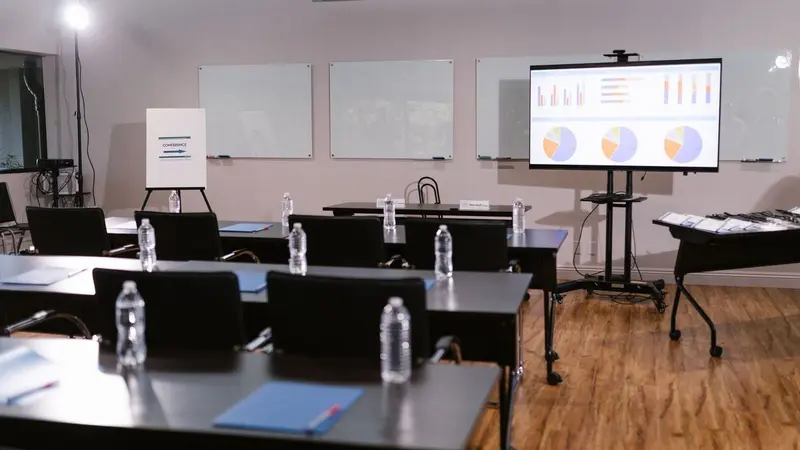
In-person (or hybrid weighted toward in-person) fits: a flagship product launch with something physical to demonstrate, a store or facility opening where the space itself is part of the story, a milestone anniversary event, or any announcement where you specifically want the visual energy of a full room for broadcast and photo coverage.
Virtual fits well: a routine financial results briefing, a leadership or executive appointment announcement, a policy or regulatory update, or any announcement where the news is primarily verbal information that doesn't lose anything by being delivered through a screen. These are also often lower-budget situations where a full physical production isn't worth the cost for what is, functionally, a statement plus a Q&A.
Hybrid fits best: announcements with strong regional or international media interest where a physical demonstration or a sense of occasion still matters — a market expansion with a product element, a partnership announcement involving both local and international press, or a launch significant enough to want in-room energy but with enough distant press interest that excluding them would mean losing meaningful coverage.
Building a Decision Framework Instead of Guessing
Rather than defaulting to whatever format was used last time, work through three questions in order.
First, what does the announcement require journalists to experience? If the answer involves touching, tasting, or watching something in physical motion, weight your decision toward in-person or hybrid. If the answer is purely informational, virtual is often sufficient and considerably less expensive to execute well, as covered in more detail in our press conference cost guide.
Second, who is actually on your target media list, and where are they based? Pull the list before deciding the format, not after. If a third or more of your priority outlets are outside easy travel distance, hybrid or virtual deserves serious consideration regardless of how attached you are to a physical event.
Third, honestly assess your ability to execute the technical side well. A hybrid event run without a dedicated AV budget, a rehearsal, and a remote-focused moderator will almost always underperform a simpler, well-run in-person or fully virtual event. If you can't commit the resources to do hybrid properly, it's better to choose one format and execute it cleanly.
Common Mistakes That Undermine Hybrid Events
A few patterns show up repeatedly in hybrid events that don't land well. Treating the livestream as an afterthought set up an hour before doors open, rather than planned alongside the rest of the event, is the most common. Close behind it is failing to assign anyone to actively manage the virtual Q&A, which leaves remote journalists watching a room full of people ask questions while their own go unanswered. Skipping a real rehearsal — one that tests the actual remote viewing experience, not just whether the camera turns on — is another, and it's the one most likely to produce a visible, embarrassing failure in front of the exact audience you were trying to impress.
Key Findings
Reach is the clearest advantage of virtual and hybrid formats — they let out-of-town, regional, and international journalists attend announcements they would otherwise miss entirely.
Physical demonstrations, informal networking, and the atmosphere of a full room remain advantages that in-person events hold and that hybrid setups can only partially replicate.
A hybrid event succeeds or fails on technical execution — dedicated connectivity, professional audio, and a moderator focused solely on the remote audience are not optional extras.
The type of announcement should determine the format: product launches with something to show favor in-person or hybrid, while routine updates and executive announcements often work fine as fully virtual events.
Testing the virtual experience from an actual remote location before the event catches problems that would otherwise surface live, in front of journalists.
A poorly executed hybrid event, where remote attendees are treated as an afterthought, frequently produces worse outcomes than simply choosing one format and running it well.
Choosing the right format is ultimately a planning decision, not a technology decision — and it's one that's much easier to get right with a team that has run press events across all three formats and can help you match the format to your actual announcement and media list. If you're weighing your options for an upcoming announcement, our press conference services team can walk through the format that fits your goals, and our guide on what makes a press conference successful in Thailand covers the planning fundamentals that apply regardless of format.
Related reading
Press Conference or Press Release? How to Choose the Right Format
Localizing a Press Release for Multiple Markets: What Actually Changes
Frequently Asked Questions
What's the difference between a hybrid and a virtual press event?
A virtual press event happens entirely online — journalists join via video call or livestream and there's no physical venue for media at all. A hybrid press event combines both: there's a physical venue with in-room press, executives, and often a product on display, while additional journalists join remotely through a livestream and can ask questions through a moderated virtual Q&A.
When should a company choose a fully virtual press conference over hybrid?
Fully virtual makes the most sense when the announcement is primarily informational — financial results, an executive appointment, a policy update — and doesn't involve a physical product or experience that benefits from being seen in person. It's also the more practical choice when budget doesn't support a full physical production, since it avoids the cost of a venue while still delivering the announcement clearly.
Is a hybrid press event more expensive than an in-person one?
Usually, yes. A hybrid event carries the full cost of an in-person venue plus additional AV, streaming, and moderation costs to serve the remote audience properly. Companies sometimes try to cut this cost by treating the livestream as a minor add-on, but that's exactly the shortcut that produces a poor virtual experience and undermines the reach advantage hybrid is meant to provide.
How do you keep virtual attendees engaged during a hybrid press conference?
The most effective approach is assigning a dedicated moderator whose only responsibility is the remote audience — reading their questions aloud, keeping them informed of when they'll be called on, and making sure the Q&A doesn't wrap up before their questions are addressed. Clear audio, a camera angle that actually shows any physical demonstration, and sending any handout materials digitally also make a meaningful difference.
What technical equipment do I need for a hybrid press conference?
At minimum, a dedicated (not shared) internet connection with backup connectivity, professional microphones that clearly capture questions from anywhere in the room, a camera setup that covers both the presenter and any physical demonstration, and reliable streaming software or a platform built for webinars or hybrid events. Equally important is time for a full rehearsal that tests the experience from an actual remote location beforehand.
Can a hybrid format work for a major product launch?
Yes, provided the physical demonstration is planned with the camera in mind and the in-room experience isn't compromised to accommodate the stream. Many major launches use hybrid successfully by keeping the core demonstration and energy focused in the room while giving remote press a clear view of the product and a genuine chance to ask questions, rather than treating them as a passive audience.
Ready to Hit YourTarget
Let's align your marketing strategy with our results-driven expertise.
Clout Media Co., Ltd.
1 Empire Tower , 27th Floor, Unit 2701-02, 2712-14 (27075), South Sathorn Road, Yannawa, Sathorn, Bangkok 10120
Email : info@cloutmediaagency.com
Tel : 096 646 2265